
The production tool, and what it actually does
A walk through the six stages a job passes through on Sustainalists — brief, quote, production, delivery, payment, rating — and what each one replaces.
Most of what goes wrong on a shoot is because of miscommunication.
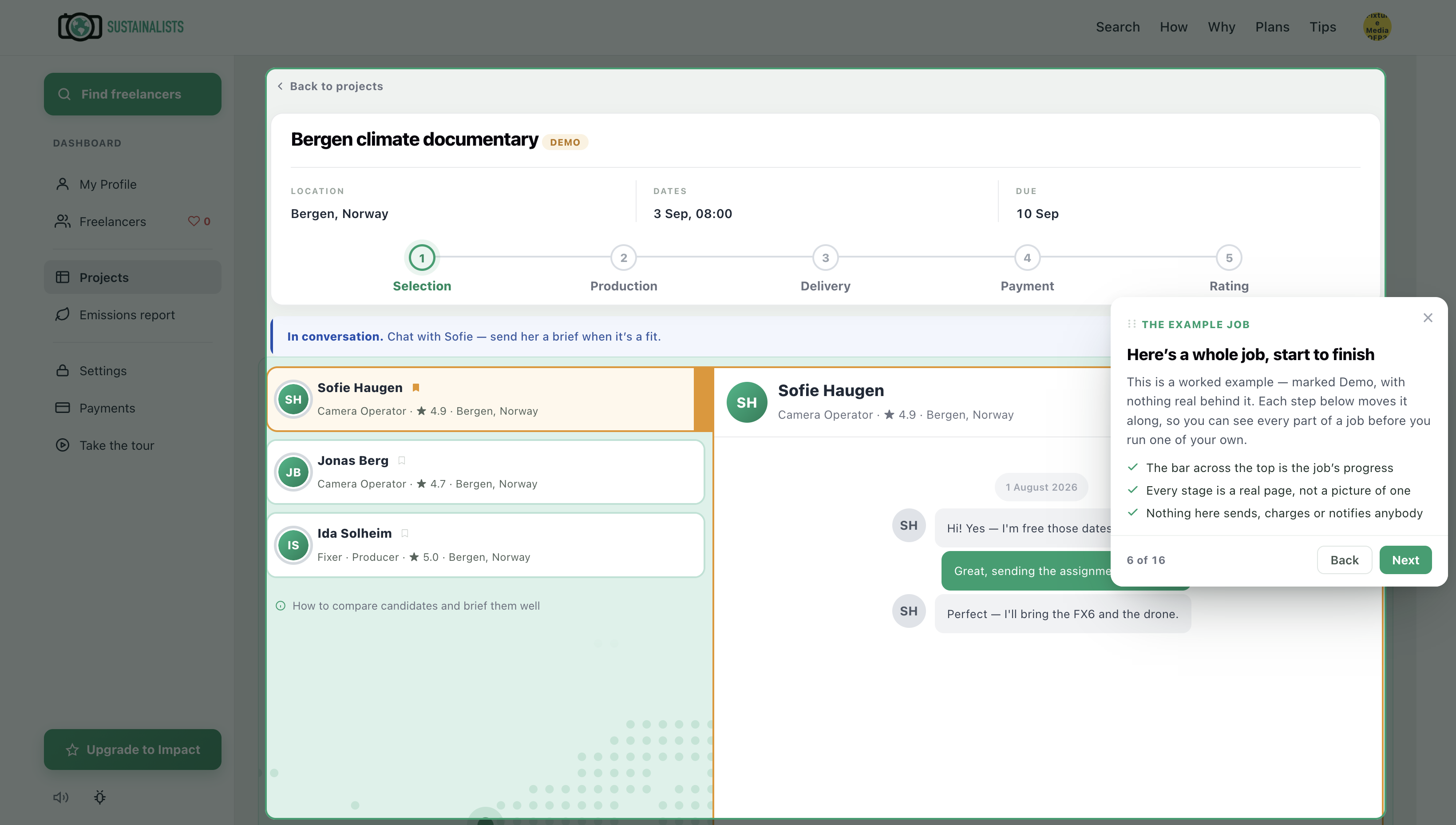
The Sustainalists production tool is our answer to that: one job, six stages, both sides looking at the same screen.
Here is what each stage is for.
1Brief
The company writes the job down: location, dates, what they need delivered, what they are paying or have budgeted. It can carry an NDA to be signed before anything confidential is said, and it can be sent to several candidates at once.
What it replacesthe opening email, and the four that follow it establishing what the first one meant.
2Quote
The freelancer answers with a price from their own rate. VAT is set per job rather than assumed.
The platform fee is added on top and paid by the company — the freelancer keeps their quote in full — and the company sees the total before accepting, not after.
What it replaces"what's your day rate", and the ambiguity about whether that included the drone.
3Production
Once the company goes ahead, the job opens a shared board: shoot days, notes, a checklist, contacts. Both sides edit it. Both sides see the current version, because there is only one.
Messages live here too, in the job rather than in a thread that started somewhere else three weeks ago. If the freelancer has added a mobile number, they get a text when one arrives.
What it replacesthe call sheet attached to an email, and the question "is this the latest one".
4Delivery
The work is handed over in batches: written pieces, photographs, media files, or a link to material hosted elsewhere. The company reviews each batch and approves it.
There are two ways the files themselves move, and it depends on the hiring company's plan:
- Standard accounts nominate their own channel in the brief — an FTP login, a link service — and collect the material there. This is what most productions do today and it works fine.
- Impact accounts have delivery built in: the freelancer uploads full-size media straight through Sustainalists and it is waiting in the job, with nothing to configure on either side.
Files handed over through the platform auto-delete three days after upload, and either side can extend that inside the last day. That is deliberate — a media archive is not what this is, and material that sits around indefinitely is a liability for both of you rather than a convenience.
Either way, the record of the handover — what was delivered, when, and what was approved — stays in the job.
What it replacesthe download link that expired, and the argument about whether version 3 was ever sent.
5Payment
The payment step sits directly beside the delivery step, so approving the work and paying for it happen in the same sitting rather than in different months.
The company releases the payment once they approve the delivery. The money goes from them to the freelancer — we are not holding it and releasing it on a schedule of our own.
What it replacesthe invoice, the chase, and the thirty days.
6Rating
Both sides review each other. Neither sees the other's review until both are in, so nobody is writing a response instead of an assessment.
Only a real, paid job that ran through the platform can be rated at all. That is what makes the number on a profile worth anything — and it is why a rating here follows you into every search result and lifts you in the ranking.
What it replacesthe reference you had to ask three people for.
Seeing it before you need it
You do not have to wait for a real job to look at any of this. There is a worked example built into the dashboard — a made-up job, marked as an example throughout, that you can step through from brief to rating in the same screens a real one opens in.
It is on the tour, and the tour is on your dashboard sidebar. Nothing in it touches your account.
We use essential cookies to run Sustainalists and, with your consent, analytics to see how it’s used. See our Cookie Policy.